O abatere de la realitatea existentei imediate.
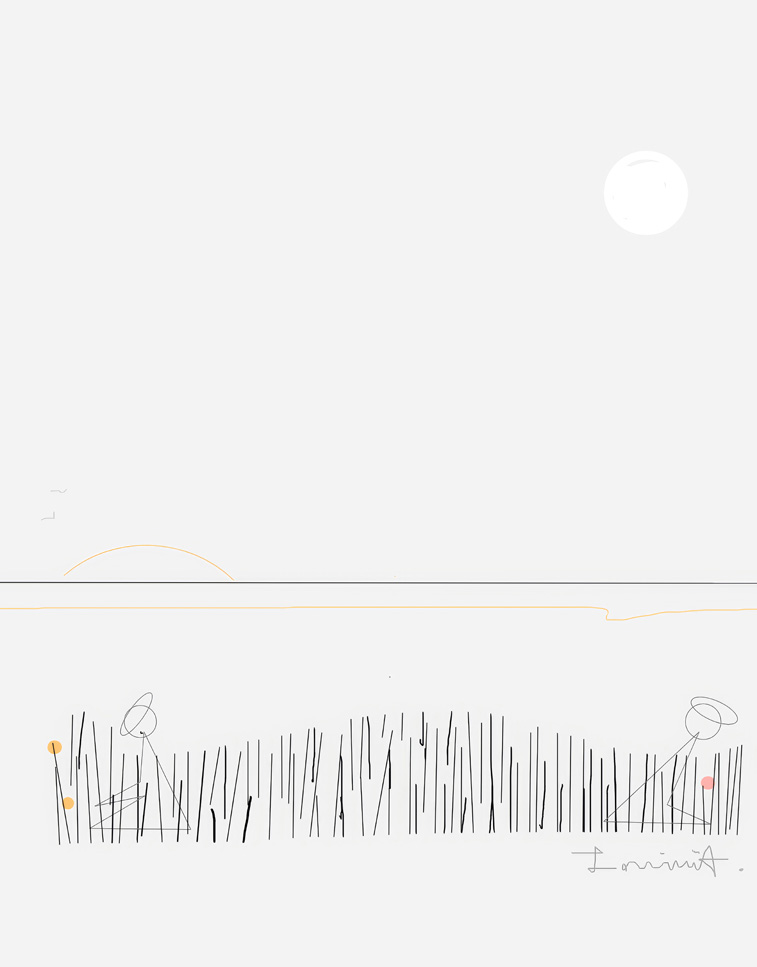
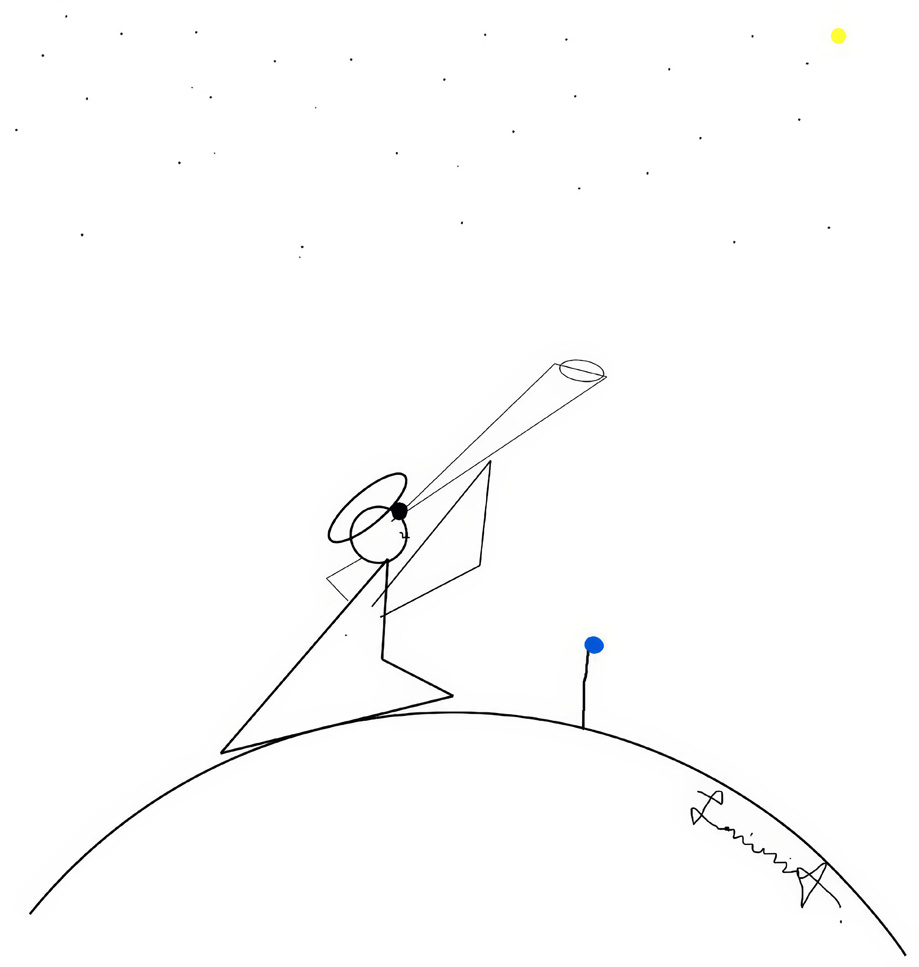
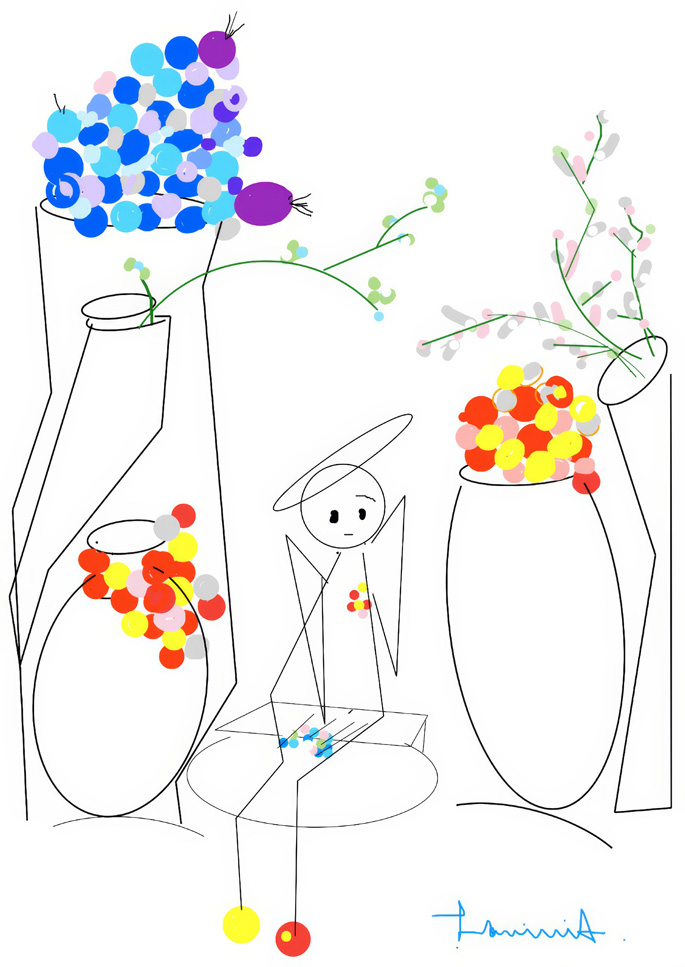
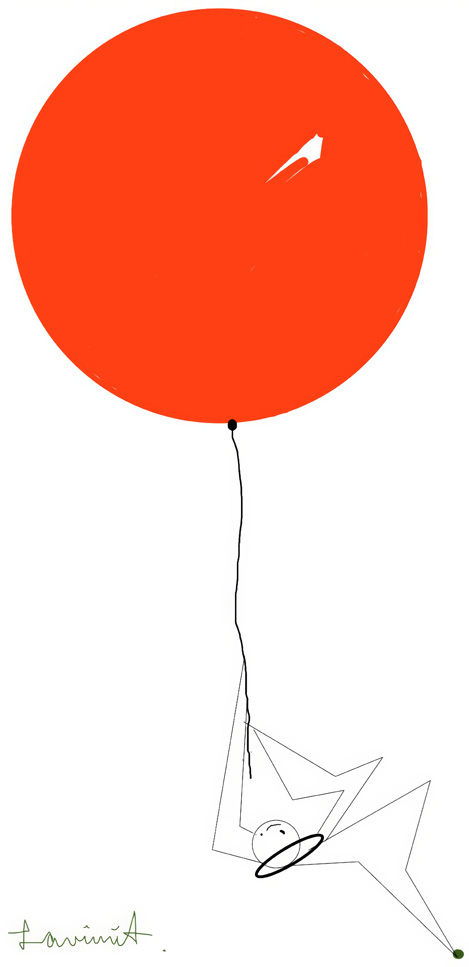
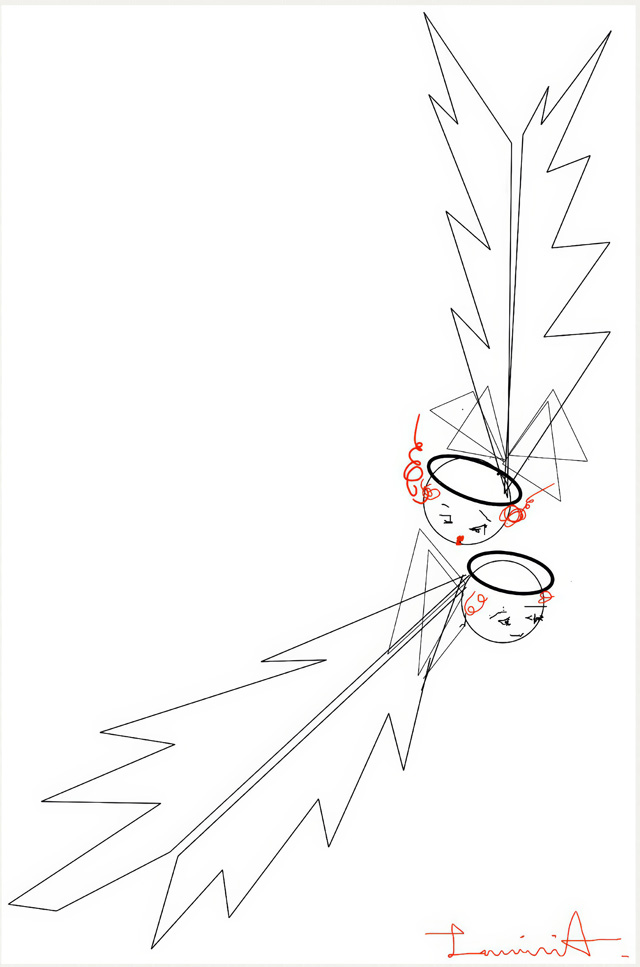
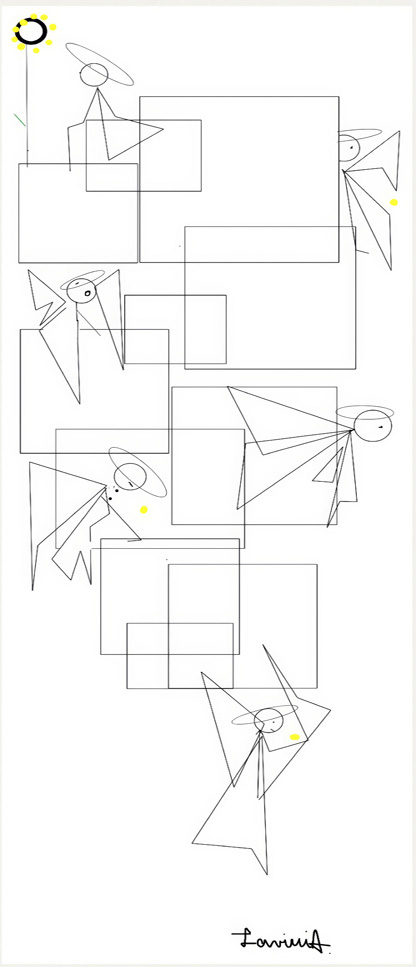
Pornind de la intelegerea faptului ca ingerii au calitatea de a fi simultan aproape de Dumnezeu si aproape de om, iar apoi daca au aceeasi radacina, s-ar desfasura intr-un univers aproximativ asemanator omului, am ilustrat in aceasta serie o realitate, o lume, un univers populat de fiinte spirituale apropiate de Creator. Un fel de dublu al omului dar pozitionat aproape de Dumnezeu, intr-o dimensiune sau spatiu foarte asemanator omului - conturati diafan plecand de la afirmatia lui Toma d’Aquino conform careia ingerii exista pentru ca exista ordine. Am infuzat seria "Ingeri" cu mesaj, cu poveste in asa maniera incat te-ai putea gandi ca mutarea legilor, regulilor umane s-a facut in dimensiunea nou creata ca un cadru-ajutor de oglindire fireasca pentru intelegerea facila a realitatii nou descrise.
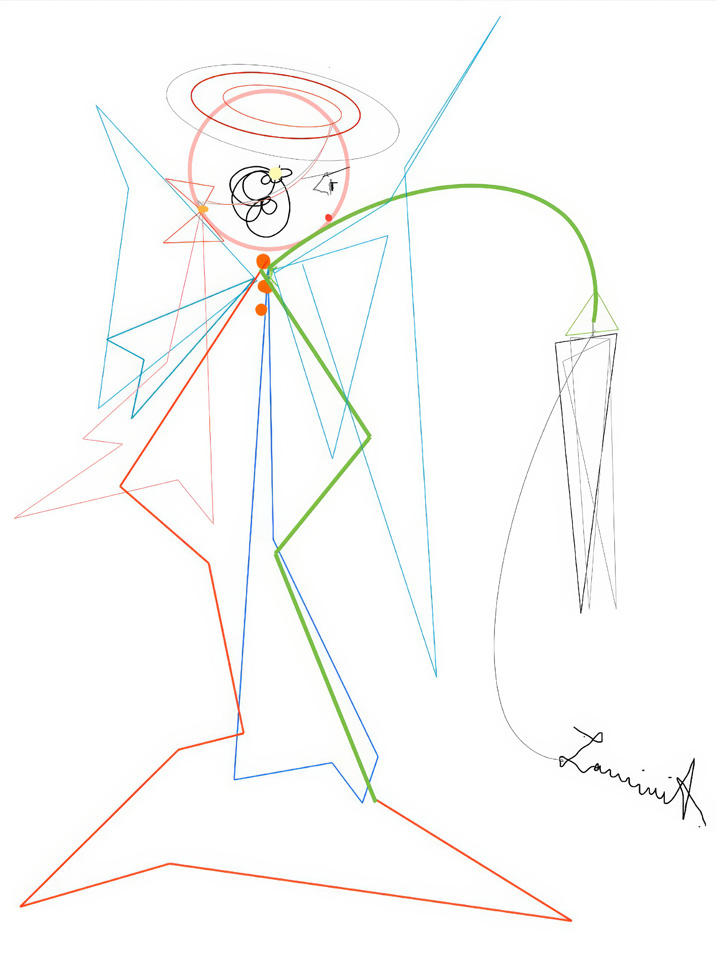
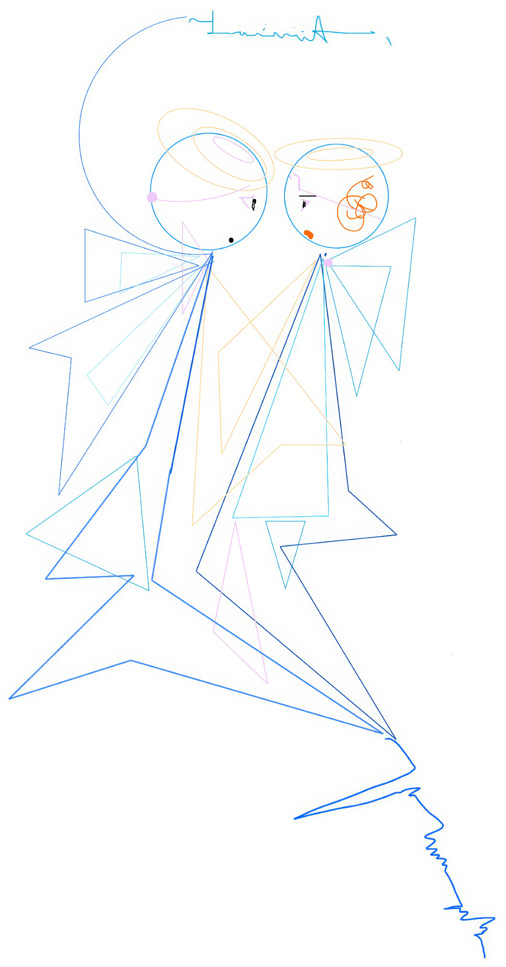
Uneori am optat pentru o paleta cromatica in nuante puternice.
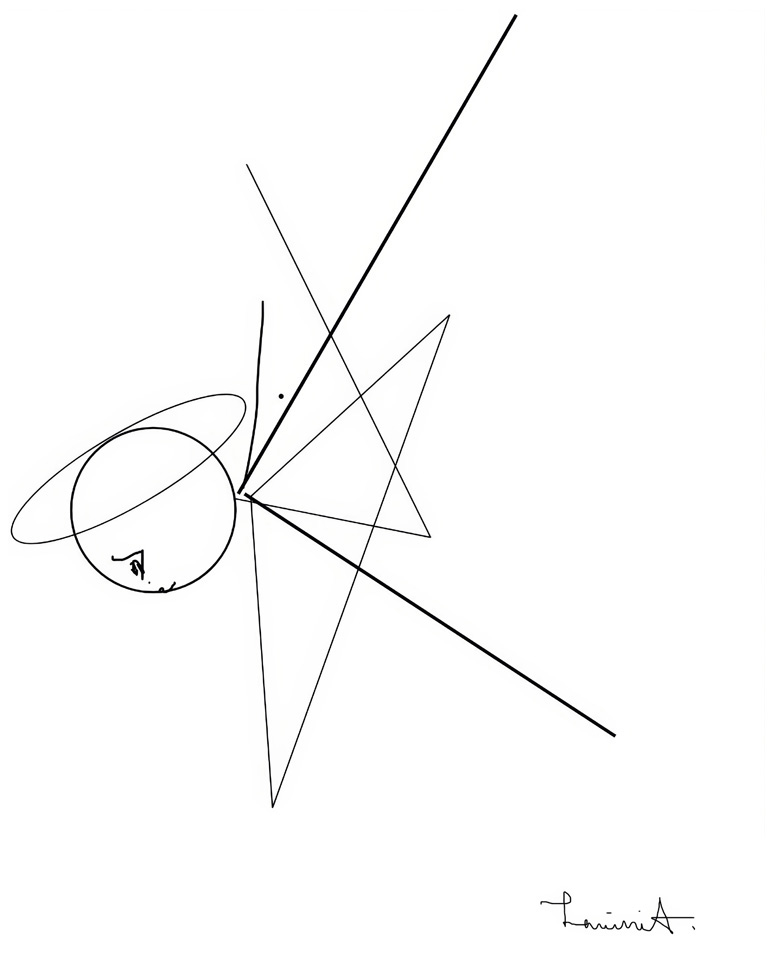
Influenta si liantul cultural al acestei serii de lucrari este sacrul ca dimensiune interioara, ca o culminatie launtrica. Punctul de pornire catre o reprezentare ultramoderna, postmoderna a fost insusi punctul apoi dreapta, cercul, triunghiul...formele geometrice. Am realizat lucrarile printr-un exercitiu impus de imaginatie folosindu-ma de analize si sinteze necesare acestei dimensiuni intr-o versiune pornita de la punct. Am dedicat ore pentru a aduce la viata un concept care vorbeste de fapt despre om, aratand ca in existenta imediat urmatoare existentei imediate, ca varianta posibila ar putea exista o lume apropiata noua atat prin elementele folosite cat si prin functia acesteia in viata noastra, reprezentand-o functional ca o experienta ce te ajuta sa te transpui si sa descoperi noi si noi trairi sau perspective-adica un fel de experienta "imersiva" intr-o lume sacra dar neconforma. Am gasit potrivit pentru ca aceasta lume ce te stimuleaza sa te transpui intr-un alt loc, dimensiune, univers, decat cel la care te-ai putea astepta, sa fie reprezentat atemporal, redat cu ajutorul formelor geometrice. Mentionez ca acest argument s-a nascut din dorinta si nevoia de a explica pe larg realitatea imaginata in seria "Ingeri". Ca instrument de lucru, forma geometrica mi-a oferit posibilitatea sa evidentiez aspecte legate de notiuni care au ajutat si din care am creat expresii, trairi, sentimente, emotii. Scopul a fost acela de a evidentia legaturile dintre geometrie si lumea inconjuratoare din universul nou nascut si totodata de a sublinia o parte din legile care domina universul, intregul, ordinea, absolutul. In limba greaca GEOMETRIA ar fi geo=pamant, metria=masura.
Am analizat, sintetizat si inteles faptul ca descrierea spatiului de existenta a unor fiinte aproape de Dumnezeu, ingerii, prin intermediul geometriei, este alegerea ce inlesneste intelegerea unor unitati sacre in viata noastra a oamenilor: fiintele sacre nevazute dar vazute cu ajutorul imaginarului, imprumutand legi, trairi, expresii ce te duc cu gandul la trairile, sentimentele, emotiile omenesti. Totodata frumusetea formelor geometrice antreneaza aici o recunoastere si o constructie mai facila a noului univers imaginat. Un univers care transcende umanul, care este dincolo de lumea fizica, de profan. Am folosit punctul, cea mai simpla forma geometrica, pentru a crea trasaturi de caracter, emotii, stari, trairi si elementul-motiv regasit in cateva din lucrarile seriei, fiinta-comuna "Roiul". "Roiul" ar fi in acest caz, reprezentarea legaturii dintre lumi. Vine de undeva, pleaca, parcurgand universul imaginat nefiind parte constitutiva a acestuia, interactionand si lasand in urma atitudini, expresii, totul pentru a contura si descrie inchipuitele trasaturi asemanatoare intre universul uman si cel de fata imaginat.
Procesul formativ initial al realitatii imediate se afla dincolo de zona spatio-temporala a intelegerii la care am fi constransi. A fost vorba de o oarecare descindere din sfera unui numen incognoscibil, aproape misterios direct intr-o lume, dimensiune, realitate ce am descris-o prin forta fenomenului senzorial.
Una din cele mai pretioase contributii la eliberarea din interior a acestei serii mi-a adus-o geometria. Desi s-ar putea crede ca aceasta ar fi balast scolastic de conceptie dinamica, a fost de fapt punctul de plecare ce m-a ajutat sa formez scheme arhitectonice dupa care universul ingeresc devine forma stabila si spatial circumcisa. Fara o soliditate obiectiva, nu pot vorbi despre o corectitudine a formei, insa am pus la origine o atitudine si o intelegere de o rara subtilitate a formei dincolo de forma, a spatiului dincolo de spatiu si a timpului dincolo de timp. Consider seria "Ingeri", o imbogatire cu modalitati noi de reflectare asupra realitatii.
Rodnicia seriei am vazut-o in simpla, fericita opozitie dintre pornirea de la schemele fixe date de lumea geometriei si infinitul eventualelor realitati inca necunoscute intru totul omului.
Am lasat sa se simta subteran prezenta unei asemanari dintre lumea omului binecunoscuta si lumea ingerilor, aceasta cu rol de centru unificator ce actioneaza pe parcursul seriei ca factor de amplificare a tensiunii expresive.
Abundenta cromatica lipseste. Lipsa ei m-a ajutat sa definesc complexitatea variantelor si realitatilor ce ar putea inlantui infinitul. Cand mi-am pus problema crizei cromatice, m-a preocupat exclusiv stabilirea unei logici functionale, dorind sa diminuez o tensiune data de culoare, indreptandu-ma in discurs catre definirea esentei mesajului initial: O abatere de la realitatea existentei imediate.
Lavinia Bujor-Deaconu
A departure from immediate reality.
Starting from the understanding that angels possess the quality of being simultaneously close to God and close to man, and subsequently, that if they share the same root, they would unfold within a universe roughly similar to that of man, I have illustrated in this series a reality, a world, a universe populated by spiritual beings close to the Creator. A sort of double of man, yet positioned close to God within a dimension or space highly resembling the human one—diaphanously outlined, starting from Thomas Aquinas's assertion that angels exist because order exists. I have infused the "Angels" series with message and story in such a manner that one might think the transplantation of human laws and rules into this newly created dimension was done as a natural, mirroring framework-aid for an easy understanding of the newly described reality. At times, I opted for a chromatic palette in powerful shades.
The cultural influence and binding thread of this series of works is the sacred as an inner dimension, as an internal culmination. The starting point toward an ultra-modern, postmodern representation was the point itself, then the line, the circle, the triangle... geometric shapes. I realized these works through an imposed exercise of imagination, using the analyses and syntheses necessary for this dimension in a version that sprouted from the point. I dedicated hours to bringing to life a concept that actually speaks about man, showing that in the existence immediately following immediate existence, as a possible variant, there could exist a world close to us both through the elements used and through its function in our lives. It represents it functionally as an experience that helps you transpose yourself and discover endless new feelings or perspectives—that is, a sort of "immersive" experience into a sacred but non-conforming world. I found it fitting for this world—which stimulates you to transpose yourself into another place, dimension, and universe than the one you might expect—to be represented timelessly, rendered with the help of geometric shapes. I mention that this argument was born out of the desire and need to explain at length the reality imagined in the "Angels" series. As a working tool, the geometric shape offered me the possibility to highlight aspects related to notions that helped me, and from which I created expressions, feelings, sentiments, and emotions. The goal was to highlight the links between geometry and the surrounding world within the newly born universe, and at the same time, to emphasize a part of the laws that dominate the universe, the whole, order, and the absolute. In Greek, GEOMETRY would be geo = earth, metria = measure.
I analyzed, synthesized, and understood that describing the existential space of beings close to God—the angels—through the medium of geometry is the choice that facilitates the understanding of sacred unities in our human lives: sacred beings, unseen but seen through the imagination, borrowing laws, feelings, and expressions that bring to mind human feelings, sentiments, and emotions. At the same time, the beauty of geometric shapes triggers here a smoother recognition and construction of the newly imagined universe. A universe that transcends the human, which lies beyond the physical world, beyond the profane. I used the point, the simplest geometric shape, to create character traits, emotions, states, feelings, and the element-motif found in several works of the series: the collective being, "The Swarm." In this case, "The Swarm" would be the representation of the connection between worlds. It comes from somewhere, it departs, traversing the imagined universe without being a constitutive part of it, interacting and leaving behind attitudes and expressions, all to outline and describe the imagined resembling traits between the human universe and the one at hand.
The initial formative process of immediate reality lies beyond the spatiotemporal zone of understanding to which we would be constrained. It was a matter of a certain descent from the sphere of an unknowable, almost mysterious numen directly into a world, dimension, and reality that I described through the force of the sensory phenomenon. One of the most precious contributions to the inner liberation of this series was brought to me by geometry. Although one might think it to be scholastic ballast of a dynamic conception, it was actually the starting point that helped me form the architectural frameworks according to which the angelic universe becomes a stable and spatially circumscribed form. Without an objective solidity, I cannot speak about a correctness of form; however, I placed at the origin an attitude and an understanding of a rare subtlety regarding form beyond form, space beyond space, and time beyond time. I consider the "Angels" series an enrichment with new ways of reflecting upon reality. I saw the fruitfulness of the series in the simple, blissful opposition between starting from the fixed frameworks given by the world of geometry and the infinity of eventual realities not yet fully known to man.
I allowed the underground presence of a resemblance between the well-known human world and the world of angels to be felt, serving as a unifying center that acts throughout the series as an amplifying factor of expressive tension.
Chromatic abundance is absent. Its absence helped me define the complexity of the variants and realities that could enchain the infinite. When I addressed the chromatic crisis, my sole concern was establishing a functional logic, aiming to reduce the tension generated by color, and directing the discourse toward defining the essence of the initial message: A departure from the reality of immediate existence.
Lavinia Bujor-Deaconu
 #1
#1
 #2
#2
 #3
#3
 #4
#4
 #5
#5
 #6
#6
 #7
#7
 #8
#8
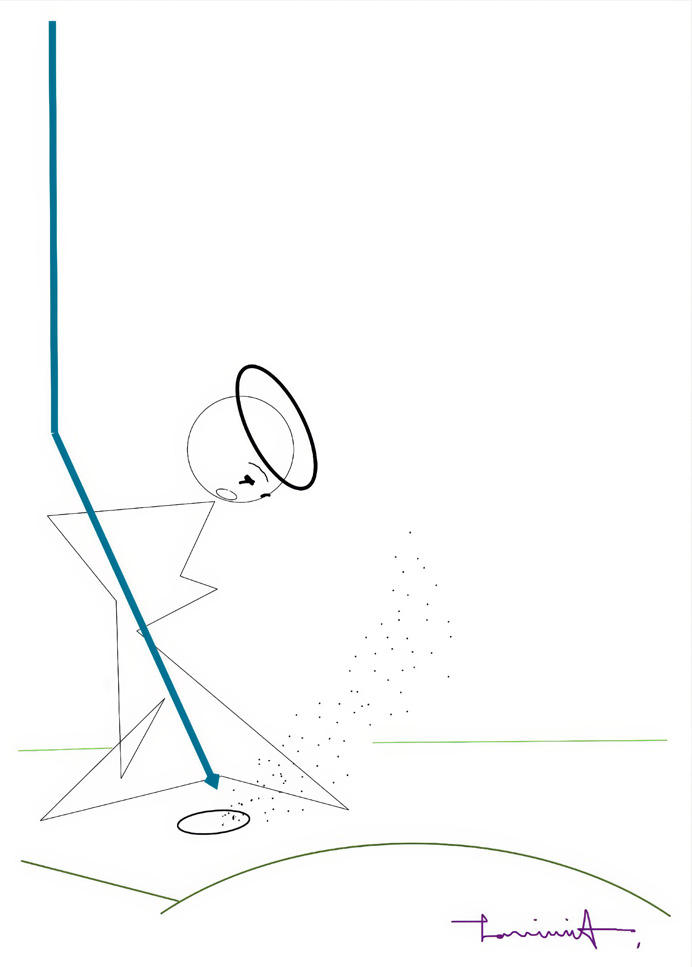 #9
#9
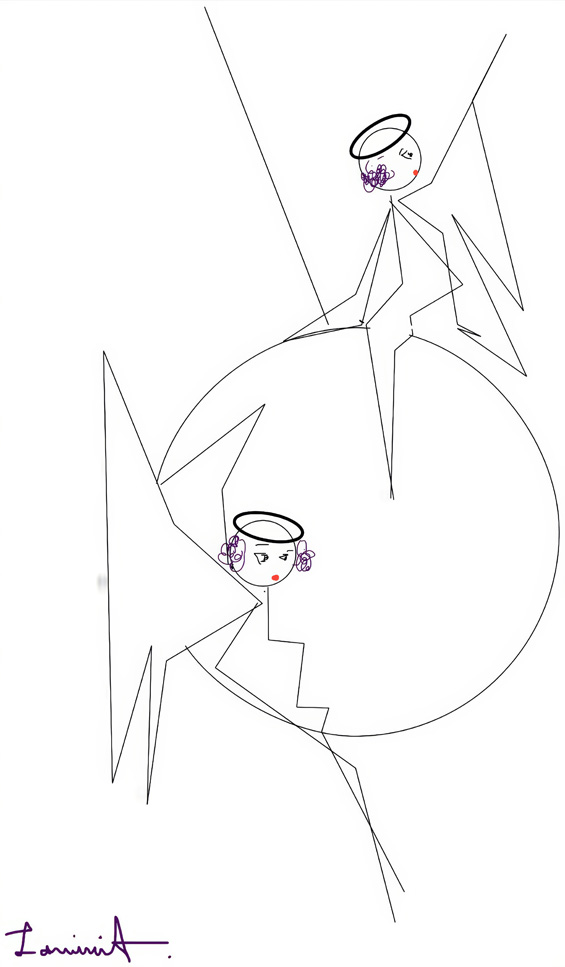 #10
#10
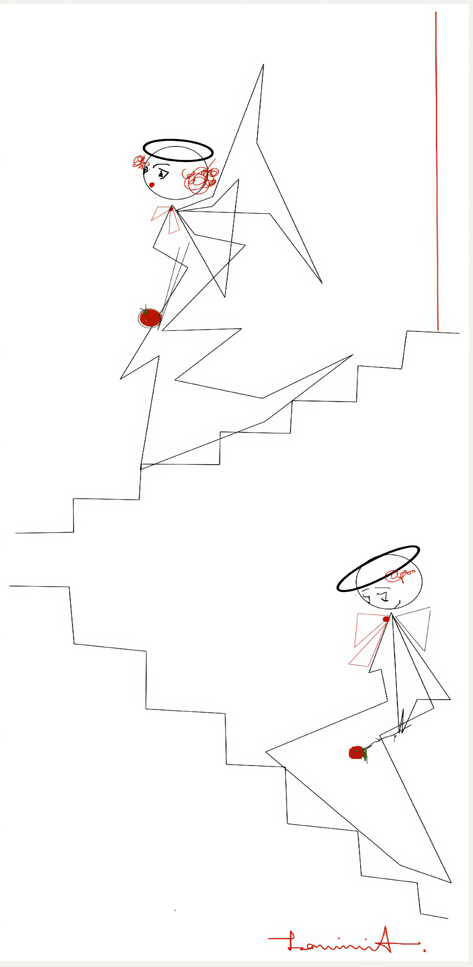 #11
#11
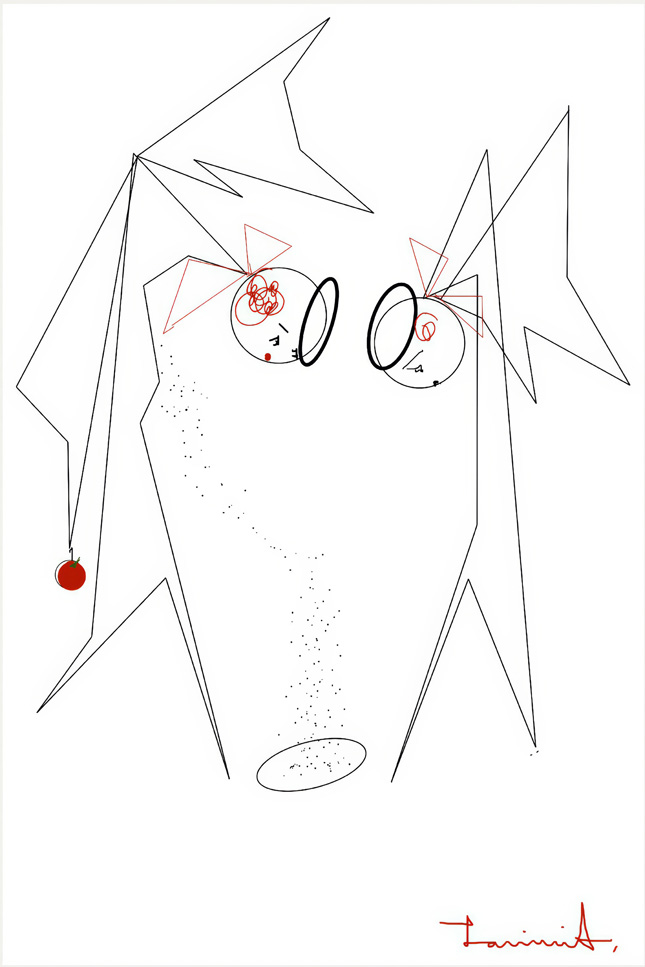 #12
#12
 #13
#13
 #14
#14
 #15
#15
 #16
#16
 #17
#17
 #18
#18
 #19
#19
 #20
#20
 #21
#21
 #22
#22